Why Aluminum Frames Are Dominating Outdoor Furniture In 2026
If you are sourcing outdoor furniture for hotels, restaurants, retail chains, or distribution across multiple climate zones, the frame decision is no longer a styling choice. It is a warranty-risk calculation. Powder-coated aluminum has moved from a premium upgrade to the default specification for commercially viable outdoor seating—and for wholesale buyers and retailers, the reason is simple: aluminum frames fail less often in the field, cost less to move across borders, and hold their resale value through repeated seasonal cycles.
At CDG Furniture, we manufacture Aluminum Frames Outdoor Furniture for B2B buyers who need frame specifications that survive real-world use—not just showroom photographs. This article breaks down why aluminum is dominating the 2026 outdoor furniture market, what wholesale buyers must verify before placing a container order, and how rope-woven aluminum collections fit into the commercial-grade product mix your customers are already requesting.
The Material Case: Why Powder-Coated Aluminum Frames Have Become the B2B Default
The global aluminum furniture market is projected to reach USD 91.89 billion in 2026, growing at a compound annual rate of roughly 6% through 2032. That growth is not driven by residential impulse purchases. It is driven by procurement teams at hospitality groups, restaurant chains, and retail distributors who are comparing total cost of ownership across frame materials—and repeatedly landing on powder-coated aluminum.
The technical reasons are well established. Aluminum does not rust when exposed to rain, humidity, or salt air. A properly powder-coated aluminum frame resists corrosion, retains color stability under UV exposure, and remains cool enough to touch in direct sun—a practical advantage for poolside and rooftop installations. It weighs roughly one-third as much as steel, which directly reduces freight cost per container and makes stackable, knock-down configurations viable for export. Most commercial-grade aluminum frames carry a 5–10 year structural warranty, giving wholesale buyers a defensible after-sales position.
For retailers, that means fewer returns from coastal customers whose steel or iron sets rusted within a season. For hospitality buyers, it means furniture that can be pressure-washed, moved daily, and reconfigured without weld fatigue. Aluminum is no longer the “budget” alternative to wrought iron—it is the risk-mitigation specification.
What Wholesale Buyers Must Verify Before Ordering Aluminum Frames
“Aluminum frame” on a quotation sheet tells you almost nothing about durability. The single most consequential specification for B2B buyers is tube wall thickness. For residential dining chairs, 1.2 mm is the minimum acceptable gauge. For sun loungers, hospitality stacking chairs, and any piece that will be moved or stacked daily, the correct specification is 1.6–2.0 mm. A frame below 1.0 mm belongs in the promotional tier—and will generate warranty claims within a single season.
Powder Coating Quality and Salt-Spray Ratings
For coastal and humid markets, the coating should carry a minimum 1,000-hour neutral salt-spray rating; asking for the test certificate rather than a marketing claim filters out suppliers who cannot document their process. High-quality commercial coatings protect the substrate from micro-scratches during transit and installation.
Packing Density and Container Logistics
Packing density is the third variable that separates profitable wholesale orders from margin-destroying ones. Full-container loads of fully assembled outdoor furniture have become increasingly difficult to secure. Knock-down (KD) and stackable aluminum frames now account for a majority of export-oriented outdoor seating structures, compressing carton volume by 40–55% and directly reducing landed cost per unit.
CDG Furniture engineers every aluminum frame around these three specifications—wall gauge, coating performance, and logistics density—because we manufacture for buyers who measure success in repeat orders and low claim rates, not one-off shipments.
Aluminum Frames Rope Outdoor Furniture: Where Weather Resistance Meets Sellable Design
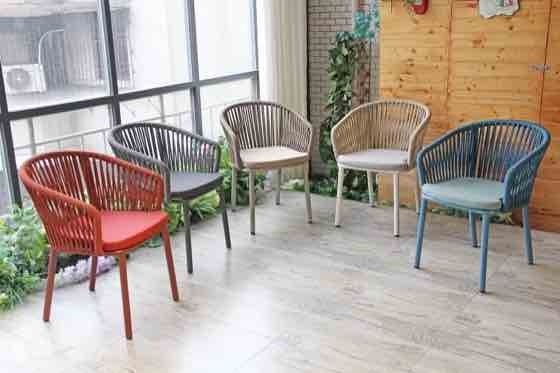
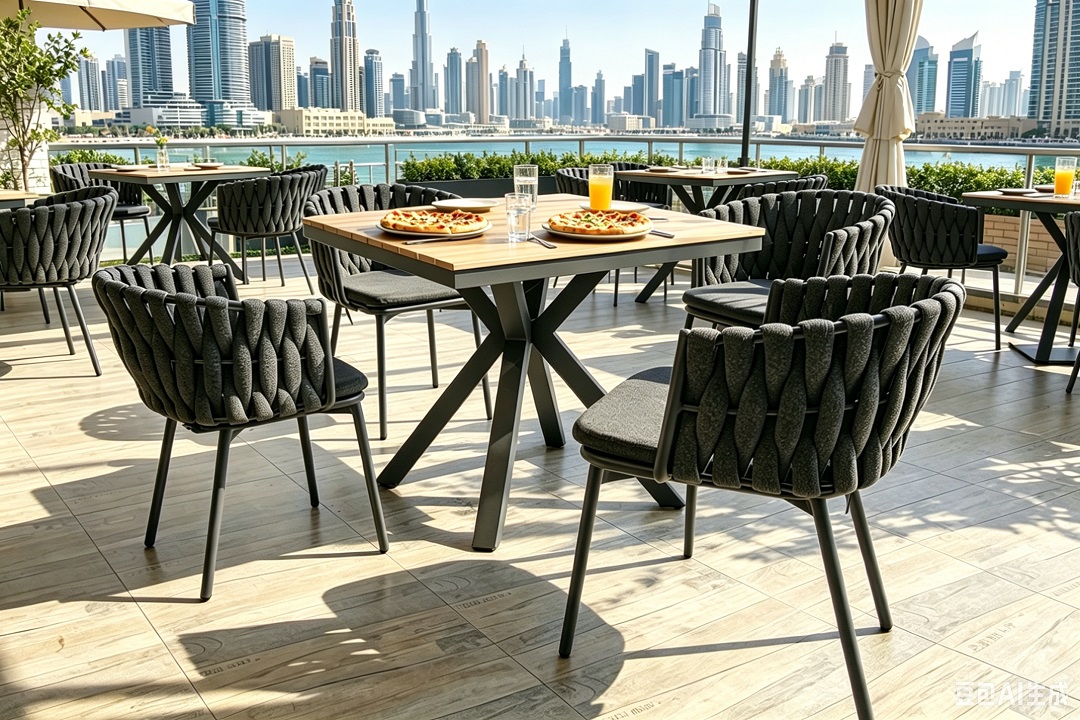
The fastest-growing subcategory within aluminum outdoor furniture is Aluminum Frames Rope Outdoor Furniture—collections where a powder-coated aluminum structure is wrapped in synthetic rope or performance olefin weave. This combination solves a problem that pure metal seating cannot: it delivers the tactile, design-led aesthetic that hospitality and retail customers now demand, without reintroducing the maintenance burden of natural rattan or wicker.
The rope itself is engineered for outdoor exposure. High-quality olefin or polypropylene rope used in commercial-grade pieces resists rain, salt, premature discoloration, and mold while maintaining mechanical strength under repeated use. Fully welded powder-coated aluminum frames wrapped in colorfast, weather-resistant rope are specified for marine environments and extreme weather conditions because the materials are designed to perform where steel would corrode and natural fibers would degrade.
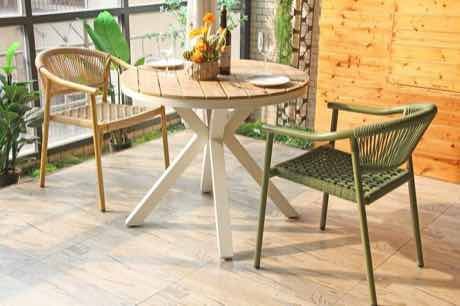
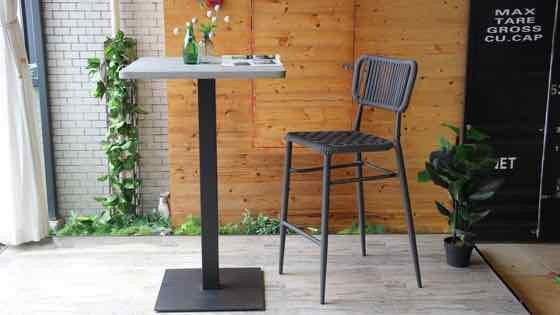
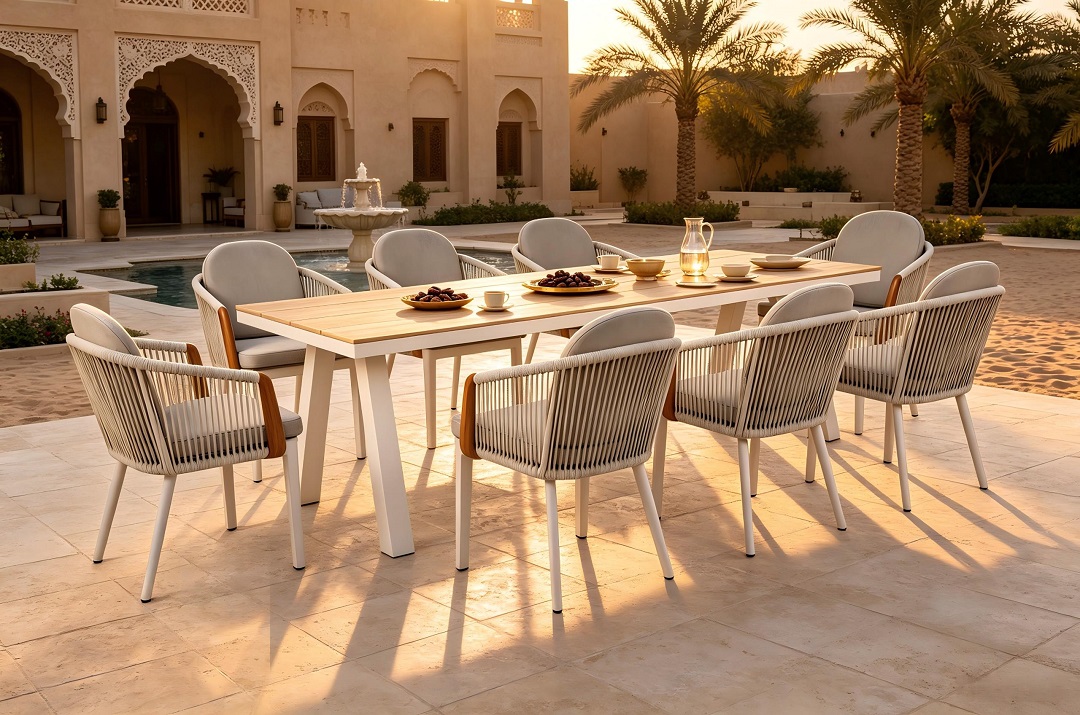
At CDG Furniture, our Aluminum Woven Rope Armchair and Stackable Rope Outdoor Dining Chair collections are built on this exact logic: aluminum alloy frames for structural integrity and corrosion resistance, hand-woven rope for design differentiation, and stackable configurations for commercial storage and freight efficiency. For wholesale buyers, rope-woven aluminum seating occupies the sweet spot where visual sellability and field durability overlap—the products retailers can display confidently and hospitality operators can deploy without a maintenance program.
The 2026 Demand Signal: Hospitality, Modularity, and Indoor-Outdoor Continuity
The commercial outdoor furniture market in 2026 is being shaped by three procurement realities that favor aluminum frames. First, hospitality projects are driving durable, commercial-grade demand—hotels, resorts, and restaurants are specifying outdoor seating as revenue-generating space, not seasonal accessories, and they need frames rated for daily commercial use. Second, modular seating and stackable formats have become defining categories, and aluminum’s strength-to-weight ratio makes those configurations structurally feasible without the bulk of steel. Third, the indoor-outdoor seamless design movement has pushed outdoor pieces toward the visual language of interior upholstery, with slim-profile aluminum frames supporting softer silhouettes and rope or textile detailing.
For a wholesale buyer or retailer, these trends translate into a clear product mix signal: aluminum-frame seating—particularly rope-woven and modular configurations—is what your commercial accounts and design-conscious retail customers are already sourcing. Suppliers who cannot document wall thickness, coating performance, and KD packing density will lose those orders to factories that can.
Your Next Step: Let’s Build the Aluminum Frame Program Your Market Needs
We are not asking you to browse a catalog and guess which frame specification fits your customers. We are offering a different starting point: send us your target market, application scenario, and volume estimate, and our engineering team will return a frame specification sheet and a rough-order-of-magnitude quotation within 24 hours.
As a manufacturer specializing in Aluminum Frames Outdoor Furniture and a provider of one-stop Outdoor Furniture Solutions, CDG Furniture works directly with wholesale buyers and retailers on:
- Wall-gauge-matched aluminum frames for your climate and use intensity (residential retail vs. commercial hospitality);
- Rope and weave specifications selected for UV exposure and salt-air conditions in your destination market;
- Stackable and knock-down engineering to reduce your landed cost per container;
- Mixed-container consolidation across dining chairs, armchairs, and tables to simplify your sourcing cycle.
Tell us what your best-selling outdoor category is, and we will send back a frame material recommendation, a packing-density estimate, and a sample lead time—no obligation, no generic catalog dump.
Request Your Aluminum Frame Specification Review →
Or email your product brief directly to our B2B team. The right aluminum frame specification is the difference between a container that sells through and a container that generates claims. Let’s get the specification right before the purchase order, not after.